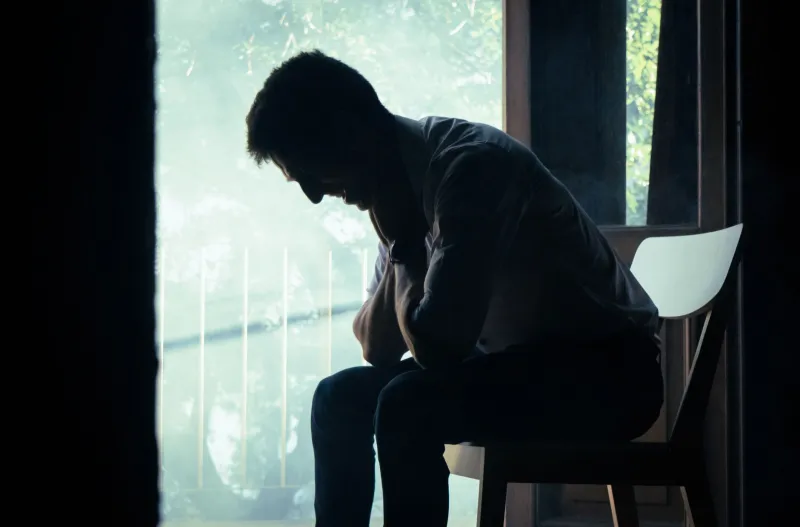
When Prayer Gets Honest: The Spiritual Power of Bringing Your Whole, Unfiltered Self Before God

There is a particular kind of loneliness that belongs exclusively to the spiritually polite. It is the loneliness of a person who kneels, folds their hands, and then carefully edits everything they actually feel before speaking it aloud—or even thinking it too loudly. The frustration gets softened into a vague request for patience. The fury at an unfair loss becomes a whispered plea for understanding. The screaming question—Why did you let this happen?—gets swallowed entirely, replaced by something more manageable, more presentable, more acceptable.
For countless American seekers, prayer has quietly become a performance. Not of faith, exactly, but of appropriate faith. And in the process, something vital has been lost.
The Unspoken Rules We Never Agreed To
Most people who grew up in any religious tradition—or who absorbed spiritual ideas from their surrounding culture—absorbed, alongside the genuine wisdom, a set of unspoken expectations about how one speaks to God. Gratitude is welcome. Requests are permitted, especially humble ones. Praise is always appropriate. But anger? Accusation? Grief so raw it borders on rage? These tend to feel off-limits, like bringing a grievance to a formal dinner party. We sense, without being told explicitly, that God prefers us composed.
The psychological term for this is self-censorship, and it operates in prayer the same way it operates in any relationship where we fear rejection or disapproval. We present the version of ourselves we believe will be accepted. We protect the relationship—or our idea of it—by concealing the parts of our inner life that feel too dangerous to expose.
The trouble, of course, is that a relationship built on managed presentations is not intimacy. It is theater.
What the Psalms Actually Sound Like
One of the most striking features of the Hebrew Psalms—perhaps the most widely read collection of prayers in human history—is how little the writers seem to care about composure. Psalm 88 ends without resolution, without comfort, with the single word darkness. Psalm 44 accuses God directly: You have rejected and humbled us... you sold your people for a pittance. Psalm 22, famously echoed by Jesus on the cross, opens with a cry of abandonment so visceral it has unsettled readers for millennia.
These are not the prayers of people performing appropriate faith. They are the prayers of people in genuine crisis, bringing the full weight of their human experience into contact with the divine—without editing, without softening, without apology.
The fact that these texts were preserved, canonized, and handed down across thousands of years as sacred literature suggests something important: the tradition itself, at its most honest, has always made room for the unfiltered cry.
The Jacob Principle: Wrestling as Worship
The story of Jacob wrestling through the night with a mysterious divine figure is one of the stranger passages in Genesis—and one of the most instructive. Jacob does not submit. He does not compose himself and offer a respectful petition. He fights, through the darkness and into the dawn, refusing to let go until he receives a blessing. And the name he is given afterward—Israel, meaning roughly one who strives with God—becomes the name of an entire people.
The tradition, in other words, named itself after the wrestling.
This image offers a profoundly different model of prayer than the one many of us absorbed. It suggests that honest struggle—even angry, exhausted, desperate struggle—is not a failure of faith. It may, in fact, be one of faith's most authentic expressions.
What Modern Psychology Confirms
Contemporary psychology offers a compelling secular parallel to this ancient wisdom. Research on emotional processing consistently demonstrates that suppressed emotion does not disappear—it relocates, typically into the body, into behavior, or into the quality of our closest relationships. Therapists regularly observe that clients who cannot express anger, grief, or confusion in safe relational contexts tend to carry those emotions as chronic stress, disconnection, or a pervasive sense of being unseen.
Prayer, understood as a relational practice, operates within the same emotional logic. When we consistently bring only the acceptable portions of our inner life into that conversational space, we are not protecting the relationship with the divine—we are stunting it. We are also, quietly, reinforcing the belief that our truest selves are unworthy of being fully known.
By contrast, the practice of bringing unfiltered emotion into prayer—naming the anger, speaking the doubt, articulating the accusation—functions similarly to what therapists call affect labeling: the act of putting difficult feelings into words reduces their psychological grip and opens space for genuine processing. Whether one frames this as neurological regulation or as the soul being heard, the effect is remarkably similar.
Permission to Be Imperfect in the Presence of the Infinite
For many seekers, the most transformative shift is not theological but relational: the dawning recognition that the divine, however one understands that word, is not fragile. God does not require our protection. The universe is not diminished by our honest fury. Whatever intelligence or presence underlies existence is not going to be offended out of relationship with us because we showed up with our real feelings instead of our polished ones.
This realization—genuinely absorbed, not just intellectually acknowledged—changes the texture of prayer entirely. When you no longer need to manage your presentation, prayer stops being a ritual obligation and starts being an actual conversation. The kind where something real is at stake. The kind that, as the Psalms demonstrate, can move from despair to something like trust within the span of a single sitting—not because the circumstances changed, but because the interior landscape shifted through the act of honest expression.
Starting the Conversation You've Been Avoiding
If you have been carrying something you have not yet brought into your prayer life—a question that feels too sharp, an anger that feels too irreverent, a grief that feels too bottomless—consider this an invitation to begin.
You do not need special language. You do not need to soften the edges. You might start simply by naming what is true: I am furious. I am confused. I don't understand what happened and I need to say that out loud. You might find, as many who have walked this path before you have found, that the act of speaking the unspeakable does not drive the divine away. It draws something closer.
The most honest prayer you have ever offered may also be the most transformative one. Not because honesty is a technique, but because it is the only door through which genuine encounter becomes possible.
The conversation you have been afraid to have may be exactly the one that changes everything.