The Voice Within the Silence: How Honest Self-Reflection Becomes a Form of Prayer
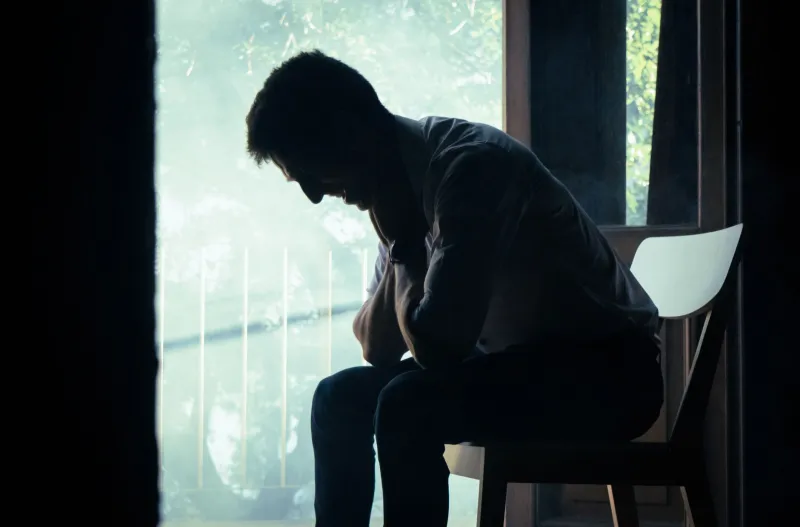
There is a conversation happening inside you right now. It does not require a Wi-Fi connection, a church pew, or a therapist's office. It asks nothing of you except the willingness to be still long enough to hear it. And yet, for most Americans navigating the relentless pace of modern life, this is precisely the conversation that never gets to finish a sentence.
We live in an era of perpetual interruption. Notifications fracture our attention before a thought can fully form. Podcasts fill the commute. Television scores the evening. Even our moments of supposed rest are colonized by the ambient hum of external input. In this environment, the inner voice — that quiet, persistent presence that many spiritual traditions regard as something far greater than mere self-talk — has been effectively crowded out.
But what if reclaiming that voice is not simply a wellness exercise? What if it is, in the most literal sense, a spiritual practice?
The Ancient Claim: The Divine Speaks From Within
The idea that genuine communion with the sacred happens in the interior life is not a modern therapeutic invention. It is among the oldest claims in human spiritual history.
The Quakers built an entire tradition around it, gathering in silence and waiting for what they called the Inner Light — a divine presence they believed dwelled within every person, requiring no intermediary to be heard. The Desert Fathers of early Christianity retreated into the Egyptian wilderness not to escape God but to strip away the noise that prevented them from hearing God. The Sufi mystic Rumi wrote endlessly of turning inward: "There is a voice that doesn't use words. Listen."
Hindu philosophy speaks of the Atman, the innermost self, as identical with Brahman — the universal consciousness underlying all existence. In this view, the act of deep self-inquiry is not narcissism. It is cosmology.
Even secular psychology, in its more reflective moments, gestures toward this territory. Carl Jung described the process of individuation — the lifelong work of becoming fully oneself — as something that carries a near-religious weight. To know oneself honestly, he suggested, is to encounter dimensions of existence that exceed the merely personal.
Why We Resist Our Own Company
If the inner voice carries such significance, why do so many of us flee from it?
The answer, uncomfortable as it may be, is that honest self-reflection is not always pleasant. The interior landscape is not uniformly peaceful. It contains grief we have postponed, questions we have avoided, and truths about our choices that we would prefer not to examine in full light. The noise of modern life offers a remarkably effective escape from all of that.
A 2014 study published in Science found that many participants chose to administer mild electric shocks to themselves rather than sit quietly alone with their thoughts for fifteen minutes. The researchers described the findings as evidence of how deeply uncomfortable humans find unstructured solitude. What they may also have been measuring, without framing it this way, is how rarely we practice the art of sitting with ourselves — and how profoundly out of shape that capacity has become.
Spiritual traditions have long recognized this tendency and named it accordingly. In Christian contemplative practice, it is called acedia — a restlessness of spirit that drives the soul away from stillness. In Buddhist teaching, the monkey mind leaps from branch to branch, unable to rest. The diagnosis varies across traditions; the underlying condition is remarkably consistent.
Practical Pathways to the Inner Conversation
Reclaiming the inner voice does not require a monastery or a meditation retreat, though neither would hurt. What it requires is intention and the willingness to begin small.
Morning pages and reflective journaling remain among the most accessible entry points. The practice, popularized by Julia Cameron in The Artist's Way, involves writing three longhand pages first thing each morning — not for an audience, not for posterity, but purely to externalize the interior monologue. Many practitioners report that after several weeks, the writing begins to surprise them. Ideas surface that they did not consciously generate. Clarity arrives on questions they had not known they were asking. Whether one attributes this to the subconscious, the higher self, or the divine is, perhaps, a matter of personal theology.
Structured silence is another avenue worth considering. This does not demand hours of formal meditation. Even ten minutes of deliberate, phone-free quiet — taken during a lunch break, before bed, or in the early morning — creates the conditions in which the interior voice can be heard. The practice is less about emptying the mind than about giving the deeper layers of one's experience enough space to rise.
The examination of conscience, a practice rooted in Ignatian spirituality, offers a more structured approach. Developed by Saint Ignatius of Loyola in the sixteenth century, the Examen invites practitioners to review their day not with self-judgment but with honest attention — noticing where they felt most alive, where they felt most depleted, and what those patterns might be pointing toward. Many Americans who have drifted from formal religious practice find this exercise surprisingly resonant, precisely because it asks nothing doctrinal. It asks only for honesty.
The Paradox of the Inward Turn
There is something genuinely paradoxical about the claim that listening to oneself is listening to something greater. It seems to confuse the personal with the transcendent, the psychological with the spiritual.
But perhaps the paradox is the point.
Every major contemplative tradition suggests that the path to the transcendent runs through the particular — through this body, this moment, this specific life with its specific griefs and longings and unfinished questions. The mystic does not bypass the self to reach the divine. The mystic goes so deeply into the self that the boundary between the two becomes difficult to locate.
This is not a claim that every passing thought is sacred, or that the ego's preferences constitute divine revelation. Discernment matters. The inner voice that emerges from genuine stillness and honest reflection feels qualitatively different from the anxious chatter of the surface mind. Most people who have experienced both know the difference, even if they struggle to articulate it.
What the contemplative traditions are pointing toward is the possibility that beneath the noise — beneath the anxiety and the self-promotion and the fear — there is something steady. Something that does not interrupt. Something that has been waiting, with considerable patience, for you to stop talking long enough to listen.
An Invitation
The next time you find yourself reaching for your phone in a moment of quiet, consider pausing. Not forever. Not even for long. Just long enough to notice what was there before the impulse arrived.
That noticing — small as it may seem — is the beginning of the most important conversation you will have today. And if the contemplatives are right, it may be the beginning of something considerably larger than a conversation with yourself.