Sacred Stillness: Why the Ancient Art of Doing Nothing May Be America's Most Urgent Spiritual Practice
There is a particular kind of exhaustion that no amount of sleep can cure. You may recognize it — a hollow fatigue that settles not in the muscles but somewhere deeper, in the place where meaning is supposed to live. For a growing number of Americans, this spiritual depletion has become as common as a morning commute, woven so thoroughly into the fabric of daily life that many have ceased to recognize it as a problem at all.
We have, as a culture, confused motion with progress. We have mistaken noise for substance. And in doing so, we have inadvertently constructed lives that leave precious little room for the kind of interior listening that genuine spiritual growth requires.
But what if the very antidote we need has been available to us all along — not in a new productivity app, not in a weekend wellness retreat, but in the ancient, countercultural act of simply stopping?
The Spiritual Cost of the American Hustle
The United States occupies a peculiar position in the global conversation about work and rest. Americans leave an estimated 768 million vacation days unused each year. The phrase "I'll sleep when I'm dead" is uttered not as a lament but as a badge of honor. Busyness, in the American imagination, has become a proxy for virtue — a signal of importance, ambition, and worth.
Yet mystics, theologians, and contemplatives across nearly every spiritual tradition have long warned against precisely this orientation. The Sufi poet Rumi wrote of the need to "sit with emptiness" as a precondition for receiving divine wisdom. The Christian Desert Fathers retreated to the Egyptian wilderness not to escape life, but to find its truest form. Indigenous American traditions have long honored periods of ceremonial stillness as essential to community and personal renewal.
The common thread running through all of these traditions is not passivity — it is attention. Deliberate, reverent, unhurried attention to the present moment and to the sacred dimension that dwells within it.
When we are perpetually busy, that attention becomes impossible. We skim the surface of our own lives, never descending into the depths where genuine transformation occurs.
The Sabbath as Spiritual Architecture
Perhaps no ancient practice speaks more directly to the modern American condition than the concept of Sabbath. Rooted in Jewish tradition and carried forward in various forms through Christianity and other faiths, the Sabbath is not merely a day of religious obligation — it is a profound architectural statement about the nature of time itself.
To observe a Sabbath is to declare, in the most concrete possible terms, that not every hour belongs to productivity. It is to carve out a protected space within the relentless forward march of the week and say: this time is different. This time belongs to something larger than my to-do list.
Rabbi Abraham Joshua Heschel, in his luminous work on the subject, described the Sabbath as "a palace in time" — a sanctuary not built of stone but of hours. The beauty of this image lies in its accessibility. You do not need wealth, a particular zip code, or a formal religious affiliation to build such a palace. You need only the willingness to stop.
For many Americans exploring or returning to spiritual practice, a modified Sabbath approach — even a few hours of technology-free, obligation-free stillness each week — has proven to be a transformative entry point. The silence, initially uncomfortable, gradually reveals itself as inhabited. As full, rather than empty.
Meditation: The Technology of Interior Listening
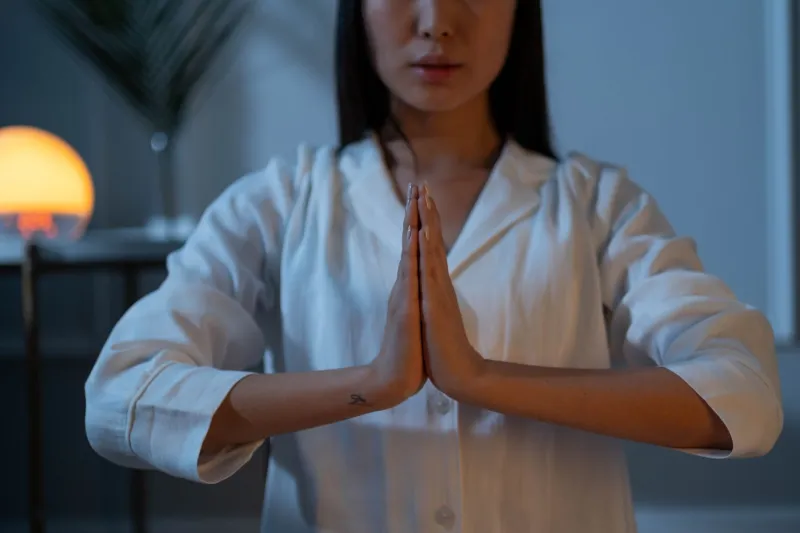
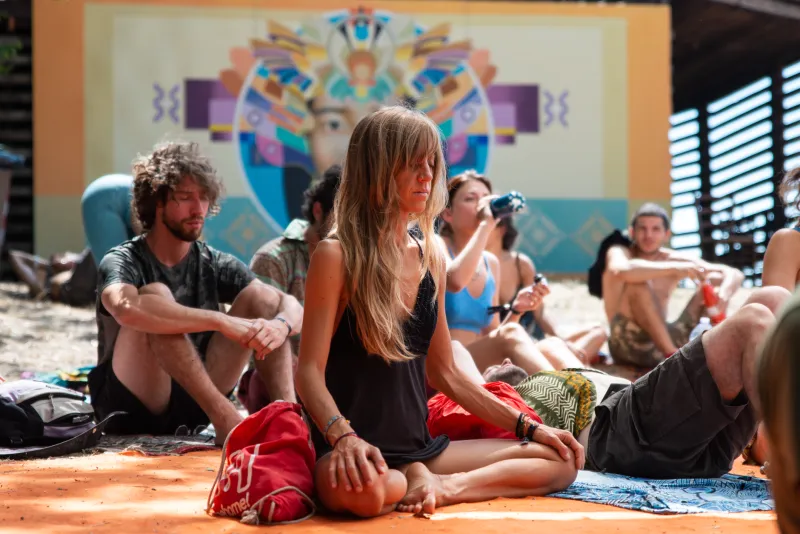
If the Sabbath provides the when of sacred stillness, meditation offers the how. Across Buddhist, Hindu, Christian contemplative, and secular mindfulness traditions, the practice of seated, intentional quietude has been refined over thousands of years into something remarkably reliable: a method for moving beneath the surface noise of the mind and encountering something deeper.
Neuroscience has begun to document what practitioners have long reported — that regular meditation measurably alters the brain's relationship with stress, reactivity, and self-referential thought. But the spiritual significance of these changes reaches beyond the clinical. When the restless chatter of the mind quiets, even briefly, something else becomes perceptible. Call it presence. Call it the divine. Call it your truest self. The name matters less than the encounter.
Beginning a meditation practice need not be elaborate. Sitting quietly for ten minutes each morning — before reaching for a phone, before speaking to anyone — and simply observing the breath constitutes a genuine contemplative practice. Over time, this small daily pause begins to reshape one's entire relationship with time, attention, and interior life.
Nature as a Doorway to the Sacred
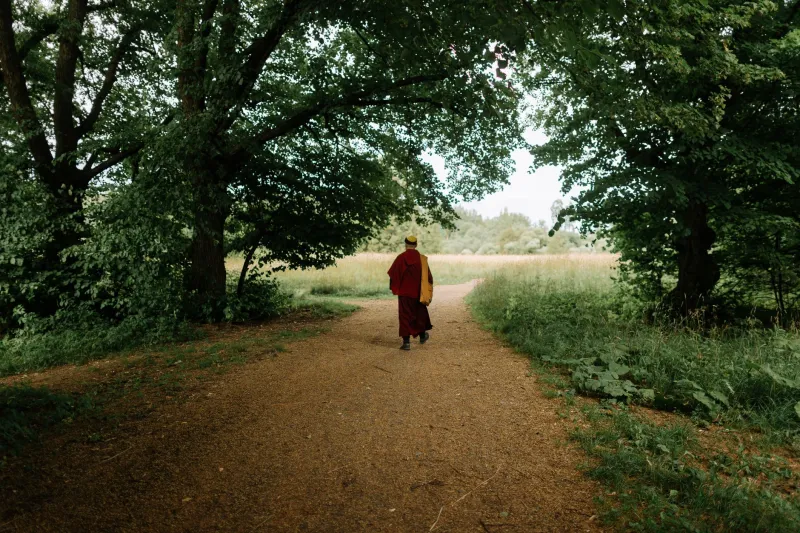
For those who find formal meditation elusive, the natural world offers another pathway into stillness. There is a reason that every major spiritual tradition features the wilderness as a site of revelation — Moses at the burning bush, Jesus in the desert, the Buddha beneath the Bodhi tree, Black Elk on Harney Peak. Nature, in its unhurried rhythms, mirrors back to us a pace of being that our constructed environments have largely erased.
A slow walk in a forest preserve, a solitary hour beside a lake at dusk, even ten minutes of deliberate attention to a backyard garden — these are not merely recreational activities. Approached with intention, they become contemplative practices. The natural world does not hurry. It does not check notifications. It simply is, with a fullness and completeness that can, if we allow it, remind us of our own.
Reclaiming the Pause
The invitation being extended here is not to abandon ambition or retreat from engagement with the world. It is something far more nuanced: to recognize that the quality of our engagement with everything — our work, our relationships, our creative lives, our sense of meaning — is directly proportional to the depth of our interior stillness.
The divine, by most accounts, does not shout. It whispers. It speaks in the register of quiet, in the frequency of the unhurried moment. If we are to hear it — if we are to hear ourselves — we must first be willing to create the conditions in which such hearing is possible.
That means choosing, regularly and deliberately, to slow down. To sit with what is. To resist the cultural pressure that equates our worth with our output. To remember, as every great contemplative tradition has taught, that we are not human doings but human beings — and that the being, properly attended to, is where all genuine meaning begins.
The pause is not empty. It never was. It is, in fact, the most sacred space available to us — and it has been waiting, patient and unhurried, for us to return.