Tuning In: How to Discover the Divine on Your Own Terms
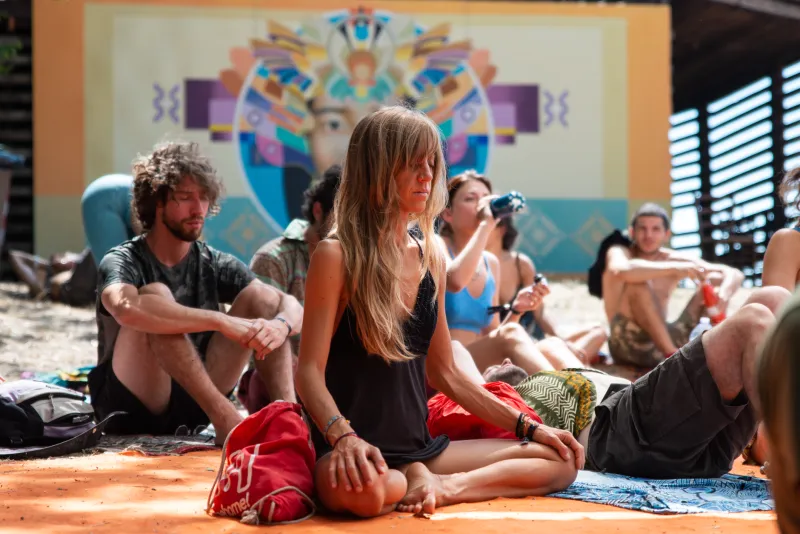
Imagine a radio receiver capable of picking up an infinite number of frequencies. Most of us spend our lives tuned to a single station—the one we inherited at birth, shaped by family, culture, geography, and tradition. Some find that station deeply nourishing. Others spend years sensing that something else is broadcasting just beyond the edge of what they were taught to hear.
The question of what the divine actually is—not what we have been told it is, but what it genuinely means to us as living, breathing, experiencing human beings—may be the most important inquiry a person can undertake. It is also, for many Americans, one of the most avoided.
This guide is an invitation to stop avoiding it.
Why So Many Americans Are Redefining the Sacred
The religious landscape of the United States has shifted with remarkable speed over the past two decades. According to Pew Research Center data from 2023, roughly 28 percent of American adults now identify as religiously unaffiliated—a category that includes atheists and agnostics, but also a substantial number of people who describe themselves as "spiritual but not religious." This group is not indifferent to questions of meaning. In many cases, they are consumed by them.
What has changed is not the hunger but the willingness to be fed by inherited answers alone. Across age groups, but particularly among Americans under 45, there is a growing insistence on spiritual authenticity—on beliefs and practices that have been genuinely examined and personally chosen, rather than simply received.
This does not represent a retreat from the sacred. In many respects, it represents a more demanding relationship with it.
The Vocabulary Problem
One of the first obstacles in personal spiritual inquiry is language. For many people, words like "God," "prayer," "soul," and "transcendence" arrive pre-loaded with associations—some beautiful, some painful, many simply inherited without examination. Before meaningful exploration can occur, it is often necessary to set those associations aside temporarily and ask: What would these words mean if I were encountering them for the first time?
Marcus, a 41-year-old software engineer from Austin, Texas, describes his experience this way: "I grew up Catholic. By my mid-twenties, I'd stopped going to Mass and stopped thinking of myself as religious. But I never stopped having what I can only call spiritual experiences—moments of overwhelming awe, a sense of being connected to something vast. I just didn't have a vocabulary for them that felt honest."
The philosopher William James, writing in The Varieties of Religious Experience more than a century ago, identified this territory precisely. He observed that the core of spiritual life is not doctrine or institution, but direct personal experience—what he called "the feelings, acts, and experiences of individual men in their solitude, so far as they apprehend themselves to stand in relation to whatever they may consider the divine."
The phrase whatever they may consider the divine is doing significant work in that sentence. It is an open door.
Reflective Exercise One: The Awe Inventory
One of the most reliable pathways to personal spiritual understanding is the examination of one's own experiences of awe. Research by psychologist Dacher Keltner at the University of California, Berkeley, has demonstrated that awe—the emotion triggered by encountering something vast that challenges our existing mental frameworks—consistently produces feelings of diminished ego, increased connection to others, and heightened sense of meaning. In short, awe produces states that most spiritual traditions would recognize as sacred.
Begin by sitting quietly and calling to mind three to five moments in your life when you felt genuinely awestruck. These need not be conventionally religious experiences. They might include:
- Standing at the rim of the Grand Canyon at dawn
- Witnessing the birth of a child
- Hearing a piece of music that seemed to dissolve the boundaries of the self
- Reading a passage of literature that felt like it had been written specifically for you
- An unexpected act of human kindness that moved you to tears
Once you have identified these moments, ask yourself: What do they share? What was present in each of them that is absent from ordinary experience? Write your answers without editing or judgment. What emerges is likely to contain the raw material of your personal theology.
Diverse Paths to the Same Mountain
Across American communities, people are arriving at their own definitions of the divine through remarkably varied routes.
Deirdre, a 55-year-old Black woman from Atlanta who grew up in the Baptist tradition, describes her current spirituality as "Baptist in its roots but much wider in its branches." After years of struggle with aspects of her inherited faith, she found herself drawn to the contemplative practices of Christian mysticism—centering prayer, the writings of Thomas Merton and Howard Thurman—alongside West African spiritual philosophy. "I didn't abandon God," she says. "I stopped letting other people's limitations define God for me."
By contrast, James, a 33-year-old Vietnamese-American physician from San Jose, California, was raised in a secular household with no formal religious background. His sense of the sacred emerged through the practice of medicine. "Standing with a patient at the end of their life, I encounter something I cannot explain scientifically," he reflects. "I don't call it God, exactly. But I don't call it nothing, either. It feels like standing at the edge of something enormous."
Then there is Elena, a 28-year-old from rural Montana who describes herself as a pagan and finds her deepest spiritual connection in the natural world—in the turning of seasons, the behavior of animals, the silence of winter forests. "My divine is not separate from the world," she says. "It is the world, paying attention to itself."
Three Americans. Three entirely distinct frameworks. And yet a striking commonality: each has moved from received belief toward encountered experience.
Reflective Exercise Two: The God-Concept Audit
For this exercise, take a blank page and write at the top: The divine, as I have been taught to understand it, is...
Complete the sentence honestly, drawing on everything you have absorbed from family, culture, religion, and society. Do not censor yourself. Include the images, the qualities, the rules, the rewards, and the punishments associated with whatever conception of the sacred you have inherited.
Then, on a second page, write: The divine, as I have actually experienced it, is...
Again, be honest. Draw only from direct personal experience—moments of genuine transcendence, connection, wonder, or inexplicable peace. Ignore what you have been told you should feel.
Now compare the two pages. Where do they overlap? Where do they diverge? The gap between them is the territory where your authentic spiritual life is waiting to be built.
Moving Toward Your Own Frequency
Personal spiritual discovery is not a destination. It is an ongoing calibration—a continuous process of listening more carefully to one's own experience, testing inherited ideas against lived reality, and remaining genuinely open to mystery.
At Chat With iGod, we hold that every sincere seeker is engaged in a conversation with something larger than themselves—whether they name that something God, the universe, consciousness, love, or simply the unknown. The name matters far less than the sincerity of the inquiry.
The divine frequency is not hidden. It has been broadcasting continuously, through every moment of beauty and grief and wonder your life has contained. The practice is simply this: to become quiet enough, honest enough, and courageous enough to hear it.
You do not need permission to begin. You never did.