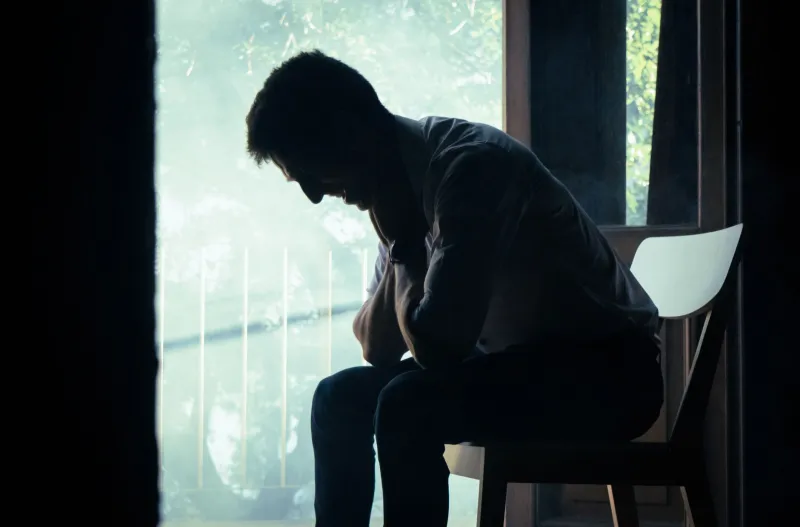
When Belief Breaks Open: The Unexpected Grace of Outgrowing the Faith You Were Given
There is a particular kind of loss that has no name in most American religious communities, and because it has no name, people tend to experience it alone, in silence, often with considerable shame. It is the loss of the faith you were given — the worldview assembled for you in childhood, handed across the pew or the dinner table, reinforced by community and ritual until it became indistinguishable from reality itself.
And then, at some point — through suffering, through education, through an encounter with a tradition different from your own, or simply through the slow accumulation of lived experience — it stopped fitting.
This is not a crisis of weakness. It is, in many cases, a sign that something in you is finally, honestly, growing up.
The Structure of Inherited Belief
Children are not given beliefs. They are given frameworks — comprehensive, coherent structures for interpreting the world, managing uncertainty, and locating themselves within a larger story. These frameworks are gifts, genuinely. They provide the psychological scaffolding within which a self can develop. They offer community, continuity, and a sense of ultimate meaning at an age when the capacity for critical evaluation has not yet fully formed.
The developmental psychologist James Fowler, who spent decades mapping what he called the stages of faith, noted that most people begin their religious lives in what he termed a synthetic-conventional stage — a faith that is largely assembled from the expectations and beliefs of significant others, held with sincerity but not yet subjected to rigorous personal examination. This is not a deficiency. It is developmentally appropriate. A child does not need to construct a theology from first principles. They need to feel safe, loved, and located within a meaningful world.
The difficulty arises when this stage is mistaken — by the individual, by the community, or by both — for the destination rather than the departure point.
When the Map Stops Matching the Territory
For a significant portion of American adults, the inherited framework begins to strain in early adulthood — during college, or in the aftermath of a major loss, or when they encounter suffering of a kind that the neat theological categories of their upbringing cannot adequately address. A parent dies in a way that seems cosmically unjust. A prayer goes unanswered in a manner that cannot be spiritualized away. A community they trusted turns out to be capable of considerable harm.
The response to this strain tends to follow one of three patterns. Some people double down — reinforcing the original framework with greater rigidity, treating doubt itself as the enemy. Others walk away entirely, concluding that the failure of the inherited version is evidence against the whole enterprise. And some — a quieter, less visible group — remain in the tension, neither defending the old map nor discarding the territory it was trying to describe.
It is this third group that tends, over time, to arrive somewhere genuinely interesting.
Doubt as Developmental Necessity
The Christian mystic Thomas Merton wrote that true faith is not the absence of doubt, but the willingness to move forward in the presence of it. This is a more demanding posture than either certainty or abandonment, and it is one that American religious culture has not always modeled well.
In communities where certainty is treated as the primary evidence of faith, doubt is experienced as betrayal — of God, of the community, of the self. The believer who confesses uncertainty risks social consequence as well as spiritual disorientation. The result is that many people carry their doubts privately, performing a confidence they no longer feel, until the performance becomes unsustainable.
But doubt, examined honestly, is not the opposite of faith. It is the mechanism by which faith matures. It is the soul's way of insisting that the map be updated to reflect what has actually been experienced. Without it, belief remains perpetually adolescent — sincere, perhaps, but untested, and therefore fragile in precisely the moments when resilience is most needed.
The Painful Passage Between
What no one adequately prepares you for is how disorienting the passage between inherited certainty and earned conviction actually is. The old framework, even when it no longer fits, provided orientation. It told you what was true, what was good, what was expected of you, and what would happen when you died. Releasing it — even partially, even provisionally — creates a vertigo that is not merely intellectual. It is existential.
People in this passage often describe feeling spiritually homeless. The community of their formation may feel inaccessible, the language of their tradition suddenly foreign, the practices that once provided comfort now hollow or even alienating. They have not yet arrived anywhere new. They are in the desert between.
This desert is, across virtually every wisdom tradition, recognized as sacred ground. The Hebrew scriptures are largely a desert narrative. The Christian tradition places its central figure in the wilderness before his ministry begins. The Buddhist path begins with the recognition that the comfortable assumptions of ordinary life are insufficient. The desert is not a detour. It is, in many traditions, the essential terrain.
What Faith Looks Like After the Fracture
The faith that emerges from this passage — when the seeker neither retreats into the original framework nor abandons the spiritual life entirely — tends to have several recognizable qualities.
It is more comfortable with mystery. The need for comprehensive, airtight answers diminishes, replaced by a capacity to hold open questions with something closer to curiosity than anxiety. It is less tribal. The sharp boundaries between those who believe correctly and those who do not begin to soften, replaced by a recognition that the sacred does not seem to observe those boundaries with the same precision that institutions do. And it is more embodied — less located in propositions and more located in practice, in relationship, in the quality of attention brought to daily life.
This faith is not easier than the inherited version. In some respects, it is considerably harder, because it cannot be outsourced to authority. It requires ongoing engagement, ongoing honesty, ongoing willingness to revise. But it is also, for many who arrive there, more genuinely sustaining — because it has been tested, and has held.
Permission to Be in Process
If you are somewhere in the middle of this passage — if the faith you were given no longer fits and you have not yet found language for what is replacing it — consider the possibility that you are not failing. You are not apostate, not weak, not spiritually deficient.
You are growing. And growth, in the spiritual life as in every other domain, requires that the previous container eventually give way.
The fracture is not the end of the story. For many seekers, it is where the real one begins.