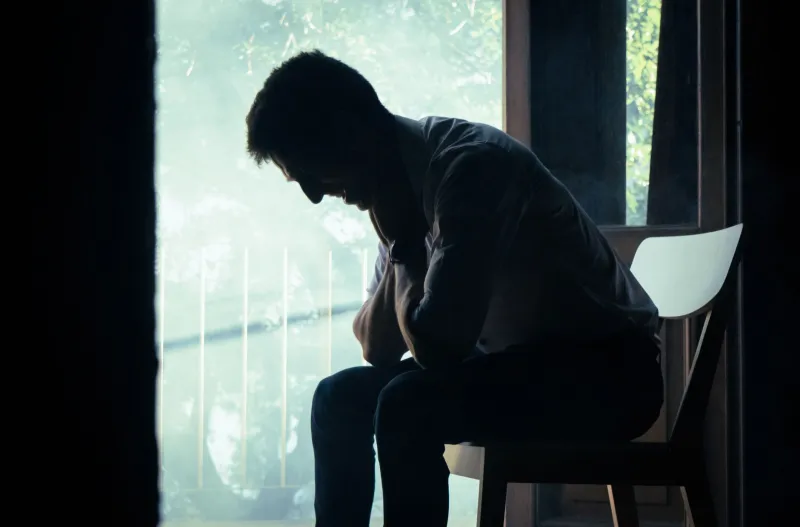
Holy Fire: Why Your Anger at God May Be the Most Honest Prayer You Have Ever Spoken

In many American faith communities, the unspoken contract runs something like this: come to God with your gratitude, your praise, your carefully worded petitions. Arrive composed. Depart uplifted. The sanctuary, both literal and metaphorical, is a place of peace—and peace, the implicit theology suggests, is what the faithful are obligated to perform.
But there is another tradition, older and considerably less tidy, that tells a different story. It is the tradition of Jacob wrestling the angel until dawn. Of Job demanding that God answer for what has been taken from him. Of the Psalmist crying out, "My God, my God, why have you forsaken me?"—a question that would later be spoken from a cross. This is the tradition of sacred rage: the furious, desperate, utterly honest conversation with the divine that refuses to dress itself in false serenity.
For millions of seekers, particularly those navigating trauma, systemic injustice, or profound loss, this tradition may be the most spiritually liberating discovery available. The permission to be angry—not despite one's faith, but within it—can crack open a prayer life that decorum had quietly sealed shut.
The Spiritual Cost of Performed Calm
The pressure to appear spiritually composed is not merely cultural. It is, for many people, deeply theological. Anger has long been catalogued among the seven deadly sins, and while the tradition actually distinguishes between sinful wrath and righteous indignation, that nuance is rarely transmitted in Sunday morning homilies. What gets absorbed instead is a simpler message: good spiritual people do not get angry. Or if they do, they certainly do not bring that anger into their relationship with God.
The consequences of this theology are worth examining honestly. When believers are taught that their anger disqualifies them from genuine spiritual encounter, they are left with two uncomfortable options: suppress the anger and perform a faith that feels increasingly hollow, or conclude that their anger proves they are not truly spiritual. Neither path leads anywhere nourishing.
What gets lost in both cases is the possibility that anger—particularly the kind that arises in response to real suffering, genuine injustice, or broken promises—might itself be a form of spiritual intelligence. That the fury is, in fact, pointing somewhere worth going.
Rage as a Theological Act
Consider what anger, at its root, actually requires. To be genuinely angry—not merely irritated, but shaken to the core by something that has gone profoundly wrong—demands a prior commitment to the way things ought to be. Rage at injustice presupposes a belief in justice. Fury at betrayal assumes that faithfulness was owed. Grief-soaked anger at suffering implies that suffering was not simply the neutral background noise of an indifferent universe.
In this sense, anger is not the opposite of faith. It may be one of faith's most honest expressions.
The biblical tradition is remarkably candid about this. The Psalms—that ancient collection of prayer-poems that forms the backbone of Jewish and Christian worship—are saturated with what scholars call lament: raw, unguarded expressions of anguish, accusation, and furious confusion directed squarely at God. Psalm 88 ends without resolution, without a tidy turn toward praise, without the reassuring coda that everything will be fine. It simply ends in darkness. And it was preserved as sacred text.
The prophet Jeremiah cursed the day of his birth. Habakkuk demanded that God explain the apparent triumph of wickedness. These were not failures of faith. They were its fullest expression—the voice of someone so genuinely in relationship with the divine that pretense was no longer possible.
What Righteous Anger Is Not
It is worth drawing a distinction here, because it matters. Sacred rage is not the same as self-righteous grievance, nor is it a license to weaponize fury against other people in the name of spiritual authenticity. The anger that becomes prayer is oriented toward the divine, toward truth, toward the righting of genuine wrongs. It is the anger of the wounded who have not yet abandoned hope.
It is also, importantly, relational. The reason Job's rage is theologically significant is not simply that he expressed it—it is that he directed it at God rather than away from God. He did not conclude that the suffering was evidence of divine absence and walk away. He stayed in the conversation, even when the conversation became a shouting match. That insistence on engagement, that refusal to allow pain to sever the relationship, is itself an act of faith.
Contrast this with the kind of bitterness that hardens into permanent accusation, that uses anger as a reason to close rather than open. The distinction is not always easy to locate in the moment—grief and bitterness can look similar from the inside—but it is real, and it matters for the long arc of spiritual development.
Bringing the Unedited Self Before the Divine
For contemporary seekers, particularly those who have experienced the kind of suffering that makes composed prayer feel like a lie, the invitation is straightforward even when it is not easy: bring what you actually have.
If what you have is fury at a diagnosis that arrived without mercy, bring the fury. If what you have is rage at a world that continues to harm the vulnerable while the powerful remain comfortable, bring the rage. If what you have is a bone-deep anger at God for the specific shape of your specific loss, bring that—all of it, unedited, undiluted, without the softening coda that you are not sure you believe anyway.
This is not irreverence. It is intimacy. The divine that can only be approached in our best moments, wearing our most presentable spiritual clothing, is not a very sovereign God. The tradition suggests something far more capacious: a presence that can receive our worst, our most unraveled, our most furious—and remain.
From Rage to Revelation
There is something that often happens on the other side of honest spiritual anger, when it is genuinely expressed rather than suppressed or performed. It is not, typically, a tidy resolution. The suffering does not disappear. The injustice is not immediately righted. But something shifts in the relationship between the one who prays and the one who is addressed.
Job, after his long and furious confrontation with God, does not receive explanations. He receives encounter. God speaks from the whirlwind—not with answers, but with presence. And somehow, inexplicably, that is enough. Not because the questions were dissolved, but because the conversation was real.
Your anger may be the realest thing you have to offer right now. It may be, in this season, your most authentic prayer. Bring it forward. The divine, if the tradition is to be believed, is neither fragile nor surprised. And the conversation that begins in fury has, throughout human spiritual history, occasionally ended in the kind of transformation that polite prayer never quite reaches.