The Inheritance You Never Asked For: Learning to Hear What Your Ancestors Left Behind
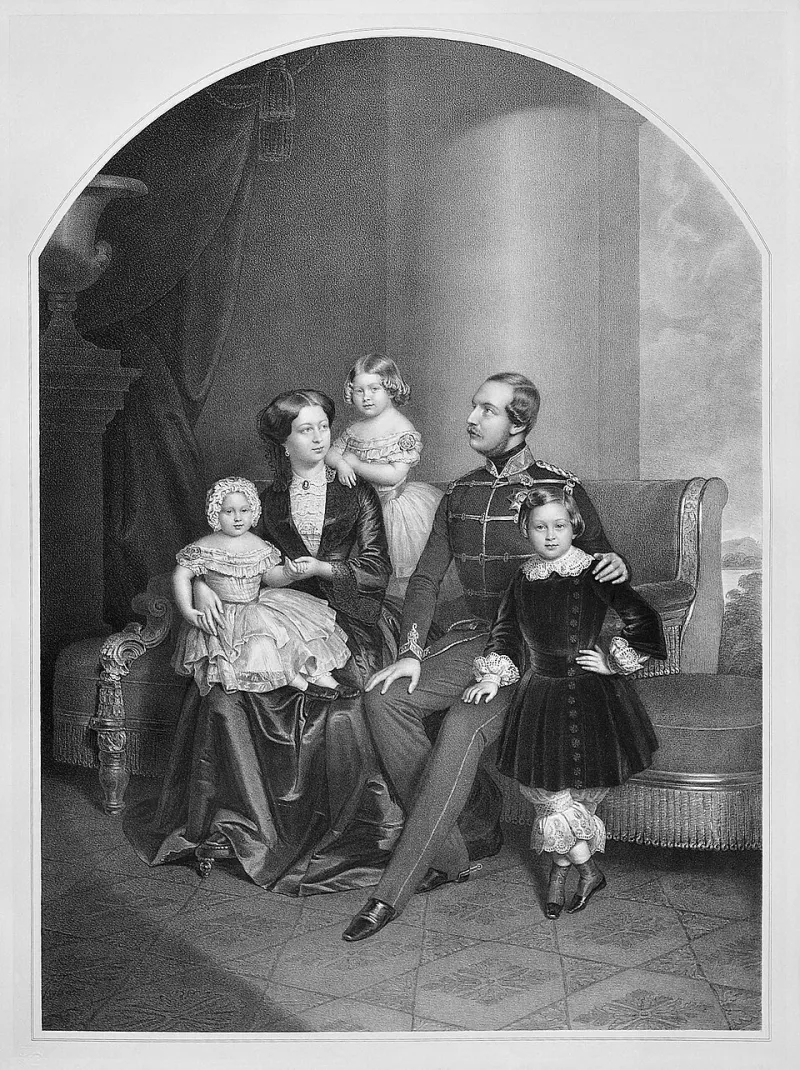
Photo: Conrad L'Allemand, Public domain, via Wikimedia Commons
Somewhere in your family history, there is a woman who prayed every morning before anyone else in the house woke up. Or a man who stopped going to church after something happened that no one ever named directly. There is someone who clutched a rosary or a Bible or a bundle of herbs as though their life depended on it. And there is someone else who threw all of it away.
You may know these people by name. You may only know them as vague references in family stories, the ones told at holidays and then quickly redirected when they got too close to something uncomfortable. Or you may not know them at all—their names lost to migration, to slavery, to the ordinary erasure that time performs on ordinary lives.
But they are still talking. The question is whether you are positioned to hear them.
What Generational Inheritance Actually Means
The concept of ancestral wisdom has gained significant cultural traction in recent years, appearing in wellness conversations, therapy offices, and spiritual communities across the United States. Sometimes it is invoked with a romanticism that papers over complexity—a soft-focus vision of wise elders passing down pristine truths. The reality is considerably more nuanced.
Generational inheritance is not a curated gift. It arrives bundled: the genuine wisdom alongside the unresolved trauma, the beautiful traditions alongside the harmful ones, the faith that sustained people through impossible circumstances alongside the rigidity that sometimes caused harm. To engage honestly with what your ancestors left behind requires the willingness to receive all of it—not to uncritically accept it, but to look at it clearly.
Research in the field of epigenetics has begun to suggest that trauma can leave biological traces that pass between generations. Therapists working in family systems theory have long observed that unresolved patterns—relational, emotional, spiritual—tend to repeat until someone in the lineage does the work of examining them. What your grandparents could not face, your parents may have reenacted. What your parents could not name, you may be living out in ways you do not yet recognize.
This is not determinism. It is an invitation.
The Stories That Shape You Without Your Permission
Every family has its operative mythology—the stories told often enough that they become the lens through which the family understands itself. In many American families, these stories carry explicit spiritual content. We are people who endure. God brought us through. Faith is what kept us together. We don't air our grievances; we pray about them.
These narratives are not neutral. They carry values, assumptions, and sometimes prohibitions. They tell you what kind of spiritual life is legitimate, what emotions are permissible in the presence of the sacred, what questions are too dangerous to ask. They shape your relationship to God, to community, to your own interior life—often before you are old enough to evaluate whether they serve you.
Engaging with your ancestral spiritual inheritance means becoming a careful archaeologist of these stories. Not to demolish them, but to examine what they are built from. When your grandmother said that suffering was God's will, what experience was she processing? What did that belief protect her from having to feel? What did it cost her? And what has it cost you, if you inherited it without examination?
Honoring Without Replicating
There is a meaningful spiritual distinction between honoring your ancestors and replicating their limitations. Many seekers struggle with this distinction because it can feel disloyal to look critically at the people who came before—particularly when those people endured genuine hardship, or when their faith was the thing that carried them through circumstances you cannot fully imagine.
Honoring your ancestors does not require you to maintain every belief they held or repeat every pattern they established. In fact, one could argue that the deepest form of honoring is to complete what they could not—to heal what they passed down wounded, to ask the questions they were not equipped to ask, to expand the spiritual territory available to the lineage.
Many Indigenous and African diasporic traditions hold that the ancestors are not static figures frozen at the moment of their death but continuing presences who grow and evolve alongside the living. Within this framework, your spiritual development is not a departure from your ancestors—it is a contribution to them. You are not leaving them behind. You are carrying the lineage forward.
Practical Ways to Enter the Conversation
You do not need a formal ritual to begin engaging with your ancestral inheritance, though ritual can be a meaningful container for this work. What you need, primarily, is intentional attention.
Start with the stories you already have. Sit with the family narratives you absorbed in childhood and ask new questions of them. What was left out? Whose perspective is missing? What emotions were never named? What spiritual questions did the people in these stories seem to be wrestling with, even if they never articulated them directly?
If you have access to older relatives, consider asking them about their spiritual lives in ways that go beyond surface-level conversation. Not what church they attended, but what they genuinely believed about suffering, about God's presence, about what happens when prayers go unanswered. You may be surprised by what emerges when someone is asked to speak honestly about these things, often for the first time.
If the living lineage is unavailable to you—through death, estrangement, or historical rupture—consider what other materials are accessible. Letters, photographs, immigration records, oral histories. The traces people leave behind carry information about who they were and what they were reaching toward.
What You Choose to Carry Forward
At some point, every thoughtful person must make a conscious choice about what they carry forward from where they came from. This is not a betrayal of origin. It is the most authentic form of spiritual agency available to a human being.
You are not obligated to maintain beliefs that cause harm, to replicate patterns that diminish you, or to practice a faith that no longer speaks to your actual experience. You are, however, invited to make these choices consciously—with full awareness of what you are releasing and genuine gratitude for what the tradition offered, even imperfectly, to the people who needed it.
The ancestors are still talking. What you do with what they say is entirely, and sacredly, up to you.