Unspoken and Unanswered: Why the Questions You Fear to Ask God Are the Ones Most Worth Asking

Unspoken and Unswered: Why the Questions You Fear to Ask God Are the Ones Most Worth Asking
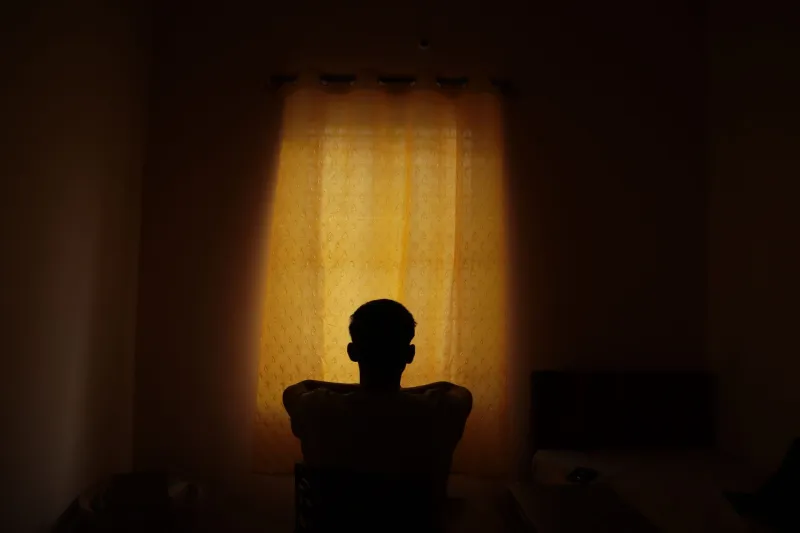
There is a particular kind of silence that has nothing to do with peace. It lives in the chest, just beneath the sternum—a tightening that arrives whenever a dangerous question forms in the mind and is swiftly, almost reflexively, pushed back down. You may have felt it in a pew, or at a family dinner table, or alone at three in the morning when the theological certainties you inherited no longer seem to hold the weight they once did.
The question forms. And then—nothing. You swallow it whole.
For millions of Americans who identify as spiritual or religious, this swallowing has become second nature. According to research from the Pew Research Center, a significant portion of adults who have drifted from organized religion cite, among their reasons, an inability to ask hard questions without social consequence. The cost of intellectual honesty in many faith communities can feel extraordinarily high: the risk of being labeled a doubter, a backslider, or worse—someone who has lost their way.
But what if the suppression of those questions is itself the spiritual crisis? What if the questions you are most afraid to voice are precisely the ones your soul is most urgently trying to ask?
The Theology of the Unasked Question
Across traditions, the act of questioning has never been as spiritually dangerous as its reputation suggests. The Hebrew scriptures are dense with figures who argued, pleaded, and demanded answers from the divine—Job most famously, but also the Psalmists, who wrote with a rawness that would make many contemporary worship leaders blush. The Islamic tradition honors the concept of tawakkul, a trust in God that does not preclude wrestling with uncertainty. Even within Buddhism, the invitation is not to accept doctrine blindly but to examine experience directly.
The irony, then, is that many of the questions people fear to ask have ancient precedents. Someone, somewhere, across centuries of human seeking, has already dared to ask whether God is listening, whether suffering has meaning, whether the tradition they inherited is the whole truth or merely a fragment of it. They asked. They survived. In many cases, the asking transformed them.
What silences us today is not theology. It is culture—specifically, the unspoken rules of the communities and families in which our faith was formed.
Why We Go Silent: The Social Architecture of Spiritual Suppression
Faith communities, at their best, offer belonging, accountability, and shared meaning. But belonging has a shadow side: the pressure to conform. When a congregation operates with an implicit understanding that certain questions signal weakness, disloyalty, or sin, its members learn quickly which parts of their inner life are welcome and which must remain hidden.
This is not always malicious. More often, it is the accumulated anxiety of a community that has confused certainty with faith. Certainty is manageable, predictable, safe. Faith—genuine faith, the kind that has been stress-tested—is none of those things. It is dynamic, sometimes disorienting, and almost always born from the willingness to sit with what is not yet resolved.
The result, for many seekers, is a bifurcated inner life: the version of themselves that shows up in community, and the version that lies awake at night asking questions that feel almost too large to hold. Over time, this split becomes exhausting. And exhaustion, more than any theological argument, is what drives people away from spiritual life altogether.
What Happens When You Finally Speak
The first time a suppressed spiritual question is spoken aloud—to a trusted friend, a therapist, a spiritual director, or even into the open air of an empty room—something shifts. The question, which loomed enormous in the silence, becomes a thing with edges. It becomes real in a way that is, paradoxically, less terrifying than the shapeless dread of keeping it hidden.
This is not merely psychological. Many seekers describe the act of voicing their deepest uncertainties as a form of prayer in itself—a turning toward the divine rather than away from it. There is something profoundly honest about saying, I don't understand why this happened, or I'm not sure I believe what I was taught, or even I'm not certain You are there at all, and yet here I am, still speaking. That honesty is the beginning of a conversation, not the end of one.
Speaking the question does something else, too: it invites response. Not necessarily a cosmic answer—those rarely arrive on demand—but a human one. When you finally tell someone what you have been quietly carrying, you often discover that they have been carrying something remarkably similar. The unasked question, once spoken, has a way of finding company.
Creating the Conditions for Radical Spiritual Honesty
If you are ready to begin voicing what you have long kept silent, the environment in which you do so matters enormously. Here are several ways to create the conditions that make honest spiritual dialogue possible.
Start with yourself. Before you bring your questions to another person, try writing them down without editing. Fill a page with every theological uncertainty, every doubt, every grievance you have been too cautious to articulate. Read it back. Notice what it feels like to see those questions in your own handwriting. This is not an exercise in despair—it is an act of self-witnessing, and it is where most genuine spiritual conversations must begin.
Choose your interlocutor carefully. Not every person in your life is equipped to hold space for spiritual uncertainty. Seek out someone who has demonstrated the capacity to sit with ambiguity without rushing toward resolution—a friend with a contemplative bent, a spiritual director, a therapist who is comfortable with matters of faith, or a trusted clergy member with a track record of intellectual humility. The goal is not agreement; it is honest dialogue.
Consider structured reflection tools. For those who find it difficult to articulate questions spontaneously, guided journaling prompts or even contemplative conversations—whether with a human interlocutor or a reflective digital space—can serve as a kind of rehearsal for the deeper dialogue to come. The act of formulating a question in writing is often the first step toward speaking it aloud.
Release the expectation of resolution. Perhaps the most important shift you can make is to stop treating your questions as problems that must be solved and begin treating them as terrain to be explored. The spiritual life is not a multiple-choice exam. The questions that matter most—about suffering, about divine presence, about the nature of justice and love—tend to deepen rather than dissolve the longer you hold them honestly.
The Courage the Question Requires
There is a kind of bravery that does not announce itself. It does not look like heroism from the outside. It looks like a person sitting quietly with a journal, or leaning across a kitchen table toward a friend, or closing their eyes and beginning a prayer with words that feel almost too honest to say.
It is the courage of the unfinished seeker—someone who has decided that the integrity of the search matters more than the comfort of performed certainty.
Your deepest questions about God, about faith, about meaning—they did not arise by accident. They arose because you are paying attention. They are evidence not of spiritual failure but of spiritual aliveness. And they deserve, at last, to be spoken.
The conversation you have been afraid to have may be the most important one you will ever begin.