Praying Through Clenched Teeth: The Unexpected Holiness of Being Furious at God

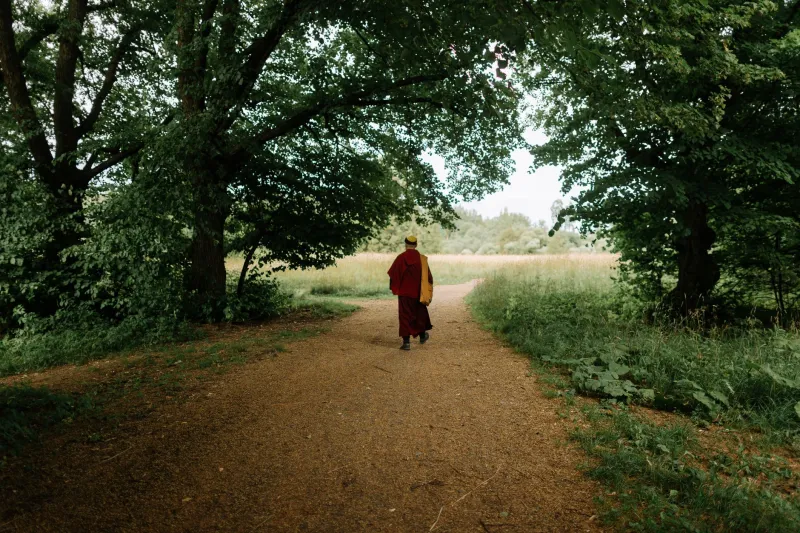
Photo: Wilfredor, CC0, via Wikimedia Commons
Let us begin with something most spiritual writing will not say directly: sometimes God feels like a betrayer.
Not an abstraction. Not a theological puzzle. A betrayer—the specific, visceral sense that something was promised and not delivered, that you held up your end of some implicit covenant and the other party did not, that you trusted and were left exposed. The child who died despite every prayer. The marriage that dissolved after decades of faithful, earnest effort. The diagnosis that arrived the same week you finally believed things were turning around. The job, the friendship, the safety, the future that was taken without warning or apparent reason.
If you have felt this, you already know that no amount of theological explanation fully reaches the place where the anger lives. And if someone has responded to your grief with a rehearsed spiritual answer—everything happens for a reason, God's ways are not our ways—you may have felt, quite reasonably, that you wanted to throw something.
This article is not going to give you a better theological explanation. It is going to suggest that your anger may be, in its own raw and uncomfortable way, a form of prayer.
The Tradition of Holy Rage
American Christianity, in its most dominant cultural expressions, has not made much room for anger at God. The prevailing posture is gratitude, surrender, and trust—all genuinely valuable spiritual orientations, but ones that can become coercive when they are treated as the only acceptable options. To express rage at the divine in many faith communities is to risk being seen as lacking faith, or worse, as spiritually dangerous.
And yet the tradition itself tells a different story. The Psalms—arguably the most emotionally complete spiritual texts in the Western canon—are saturated with fury. Psalm 88 ends in darkness with no resolution. Psalm 44 accuses God of sleeping, of rejecting and humbling the people, of selling them for nothing. The prophet Jeremiah curses the day of his birth and accuses God of deceiving him. Job refuses to accept the comfortable explanations his friends offer and demands an audience with the divine to register his complaint directly.
These are not peripheral figures. They are at the center of the tradition. Their anger was not edited out. It was preserved, sung, and handed down across millennia—which suggests that the tradition itself recognizes something that our contemporary spiritual culture often forgets: rage at the divine is not the opposite of faith. It is one of faith's most intense expressions.
Why Suppressed Anger Is a Spiritual Problem
When a person is genuinely furious at God but has been taught that such anger is impermissible, they face a particular set of unattractive options. They can perform a faith they do not feel, which produces a kind of spiritual dissociation—going through the motions while the actual interior life goes underground. They can abandon spiritual practice entirely, concluding that a God they cannot be honest with is a God they cannot be in relationship with. Or they can direct the anger somewhere else: at themselves, at the people around them, at the institution of religion broadly.
None of these outcomes serve the person well. And all of them share a common root: the belief that authentic relationship with the sacred requires the management and concealment of one's actual emotional state.
This belief is worth examining carefully. In any human relationship of genuine depth, the capacity to bring anger into the conversation—honestly, without performing it and without suppressing it—is a mark of intimacy, not a violation of it. We are most honest with the people we trust most. The inability to be angry with someone often signals not reverence but distance.
If the divine is capable of relationship at all, it seems reasonable to suppose that it can withstand your honesty.
What Happens When You Actually Say It
There is a meaningful difference between being angry at God and bringing that anger directly into conversation with the divine. The first is something that happens to you. The second is something you choose—and the choosing matters.
Bringing anger into prayer is an act of continued engagement. It means you have not walked away. It means you are still, despite everything, addressing the sacred rather than simply raging into the void. In this sense, even the most furious prayer is a declaration of relationship. You do not argue with someone you have given up on.
People who have made this choice—who have sat down with their fury and spoken it plainly, without softening it for palatability—often report something unexpected afterward. Not resolution. Not an answer. Not the anger dissolving into peace on any particular schedule. But a quality of honesty that had been absent from their spiritual life, and that absence, once filled, changes something fundamental.
The prayer that begins I am furious at you and I do not understand what you are doing and I need you to know that this has broken something in me is not a lesser prayer than the one that begins Thank you for all your blessings. It may, in fact, be a braver one.
Moving Through, Not Around
Spirituality that bypasses genuine emotion in favor of elevated frameworks is not actually spiritual development—it is spiritual avoidance wearing a more impressive costume. The path through anger is not around it.
This means allowing the anger to be fully present without immediately trying to transform it into something more acceptable. It means resisting the impulse to rush toward forgiveness or acceptance before those states have been genuinely reached. It means staying in the conversation with the sacred even when—especially when—the conversation is uncomfortable.
It also means being patient with yourself. Spiritual anger of the kind that follows genuine loss or betrayal does not resolve on a tidy timeline. The movement from fury to whatever comes next is rarely linear. There will be days when you believe you have made peace with something, followed by days when the anger returns as fresh as it was at the beginning. This is not spiritual failure. This is what it looks like to be a human being in honest relationship with something larger than yourself.
The Faith That Survives the Fire
There is a particular kind of faith that exists only on the far side of genuine spiritual crisis—the kind that has been tested by real fury and real doubt and real uncertainty about whether any of this means anything at all. This faith does not look like the faith that preceded the crisis. It is quieter, less certain of its own formulations, and considerably more durable.
It is the faith of someone who stayed in the conversation when leaving would have been easier. Who prayed through clenched teeth when nothing else was available. Who refused the false comfort of performed serenity and chose, instead, the harder authenticity of bringing everything—including the rage—before the sacred.
If you are in the middle of that fury right now, know this: you have not left the spiritual path. You may, in fact, be walking its most demanding stretch.