Mirror, Mirror: Why the Most Difficult Spiritual Conversation You'll Ever Have Is With Yourself

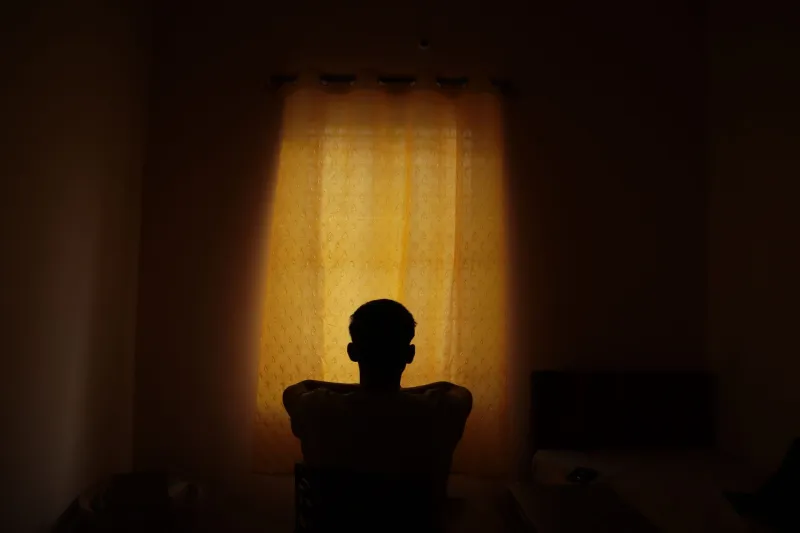
There is a conversation most of us have been postponing for years. Not the difficult talk with an estranged parent, not the overdue reckoning with a colleague who wronged us, and not even the vulnerable prayer we have been afraid to bring before God. The conversation we most consistently avoid is the one that happens — or more accurately, refuses to happen — inside the private chambers of our own minds.
Self-honesty sounds simple. In practice, it may be the most demanding spiritual discipline a person can undertake.
The Comfortable Noise We Manufacture
Modern American life has become extraordinarily efficient at helping us avoid ourselves. Between the relentless ping of notifications, the soothing scroll of social media feeds, the background noise of streaming services, and the perpetual busyness we wear like a badge of honor, we have constructed an elaborate system for never sitting quietly enough to hear what we actually think — or feel, or fear, or need.
This is not entirely accidental. On some level, the psyche is a gifted architect of avoidance. It understands, with an intelligence older than language, that certain truths are uncomfortable. And so it builds distractions the way a skilled contractor builds walls: efficiently, convincingly, and with great attention to aesthetic appeal. The result is a life that looks full from the outside while remaining oddly hollow from within.
Spiritual traditions across centuries have named this phenomenon in different ways. Buddhism speaks of the untrained mind as a restless monkey, swinging from branch to branch to avoid stillness. Christian mystics described the "false self" — the persona we construct to protect our wounds from exposure. Modern psychology calls it cognitive dissonance or motivated reasoning. The language varies; the experience is universal.
Why Self-Deception Feels Like Wisdom
One of the most disorienting aspects of self-deception is how reasonable it feels in the moment. We do not experience ourselves as avoiding the truth. We experience ourselves as being practical, or protective, or simply realistic. The internal narrative we construct around our avoidance is typically coherent, sympathetic, and deeply persuasive — because we are, after all, its author.
Consider the person who insists they are not bitter about a professional slight, only to find themselves subtly undermining a colleague's success at every opportunity. Or the individual who sincerely believes they have forgiven a family member, yet feels their chest tighten whenever that person's name is mentioned at Thanksgiving. Or the seeker who earnestly pursues spiritual growth through books, podcasts, and retreats, but who has never once examined the grief they have been carrying since their twenties.
The mind is remarkably skilled at dressing avoidance in the clothing of virtue. Denial becomes "staying positive." Suppression becomes "moving on." Rationalization becomes "seeing the bigger picture." Each of these reframings contains just enough truth to be believable — and that small percentage of truth is precisely what makes them so effective at keeping us from the larger truth beneath.
The Spiritual Stakes of Inner Dishonesty
For those who hold a spiritual orientation — whether rooted in traditional faith, personal theology, or a broader sense of transcendence — the consequences of self-deception extend beyond mere psychological discomfort. When we are dishonest with ourselves, we are, in a very real sense, dishonest in our spiritual lives as well.
Prayer offered from behind a mask is a diminished prayer. Meditation practiced as an escape from self-knowledge is, at some level, a sophisticated form of avoidance. Worship that does not include an honest reckoning with who we actually are — our shadows as much as our aspirations — can become another comfortable noise, another well-constructed wall.
This is not a condemnation. It is an invitation. The great spiritual traditions do not ask us to be perfect before we approach the Divine. They ask us to be present — genuinely, vulnerably, honestly present. And presence requires that we first become honest with ourselves about where we actually are, rather than performing the version of ourselves we wish we were.
Recognizing the Patterns That Keep Us Stuck
Moving toward authentic self-dialogue begins with learning to recognize the specific ways we tend to deflect. For most people, these patterns fall into a handful of recognizable categories.
Intellectualization is perhaps the most common among spiritually inclined individuals. We become so adept at discussing our inner lives in abstract, philosophical terms that we never actually feel what we are talking about. We can articulate the concept of grief with considerable eloquence while remaining entirely insulated from the grief itself.
Projection moves our discomfort outward, locating in other people the qualities we cannot bear to acknowledge in ourselves. The person who is secretly afraid of failure frequently judges others as lazy or uncommitted. The individual who harbors unexamined prejudices often speaks most loudly about the prejudices of others.
Spiritual bypassing — a term coined by psychologist John Welwood — describes the use of spiritual concepts and practices to sidestep unresolved emotional wounds. It is the seeker who talks endlessly about unconditional love but has never addressed their deep, abiding difficulty in receiving it.
Recognizing these patterns is not cause for shame. It is cause for compassion — toward yourself, first and foremost.
A Framework for Moving Forward
The path toward genuine self-dialogue is not a dramatic confrontation with the darkest corners of the psyche. It is, more often, a series of small, courageous acts of noticing.
Begin by creating the conditions for honesty. This means carving out genuine silence — not the performative quiet of a meditation app, but actual unstructured time in which you are not producing, consuming, or performing anything. Even fifteen minutes of this quality of silence each day can begin to soften the internal defenses.
From within that silence, practice asking questions you do not already know the answer to. Not "Why am I stressed?" — to which you have a ready, socially acceptable answer — but "What am I afraid to want?" or "What truth am I most invested in not seeing right now?" Allow the question to sit unanswered for as long as it needs to. The discomfort of not-knowing is itself a form of spiritual practice.
Write without editing. Journaling has long been recommended by therapists and spiritual directors alike precisely because the act of writing slows the mind enough to allow something real to surface. The crucial discipline is to resist the editorial impulse — to let the words appear without immediately smoothing them into something presentable.
Finally, treat your own inner life with the same quality of attention you would offer a beloved friend. If someone you deeply cared for came to you with a painful truth, you would not immediately argue with them, minimize their experience, or redirect them toward a more comfortable narrative. You would listen. You would stay. You would let what is true be true.
The Prayer Beyond Words
There is a reason this kind of radical self-honesty feels, to many seekers, indistinguishable from prayer. When we genuinely stop performing — when we drop the carefully constructed narrative of who we believe we should be and simply witness who we are — something opens. Call it awareness, call it grace, call it the quiet attention of a listening universe. Whatever name you prefer, the experience is consistent: in the moment of genuine inner honesty, we are somehow less alone.
This is the paradox at the heart of self-knowledge as spiritual practice. We descend into the self not to become more self-absorbed, but to become more transparent — to ourselves, to others, and to whatever larger presence we sense moving at the edges of our awareness.
The conversation you have been afraid to have with yourself is not a punishment. It is an invitation. And it has been waiting, with extraordinary patience, for you to be ready to begin.