The Art of the Inner Interview: How Asking Yourself Better Questions Unlocks Spiritual Transformation

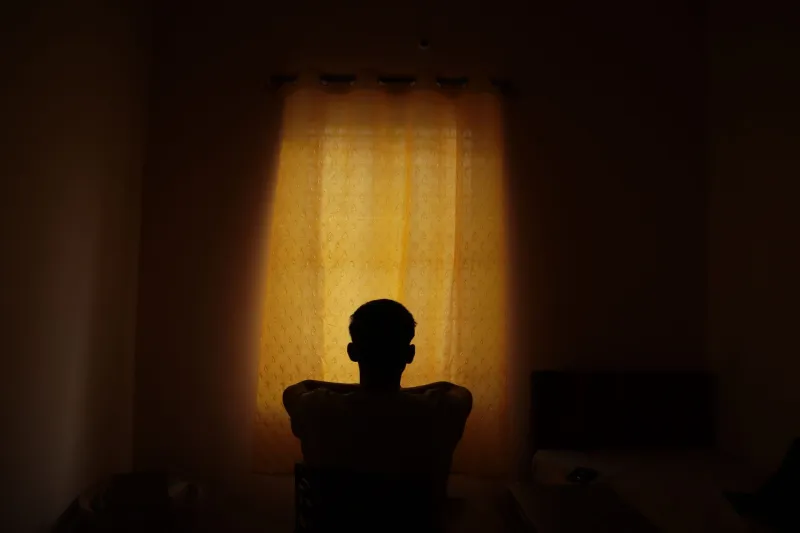
There is a particular kind of conversation most of us have never been formally taught to have. It does not require another person across the table. It does not demand a therapist's couch or a confessor's booth. It asks only for a few minutes of honest stillness—and the willingness to pose a question you are not entirely sure you can answer.
This is the practice of inner inquiry. And for those who take it seriously, it becomes something astonishing: a dialogue that feels, over time, less like talking to yourself and more like being heard by something vast.
Why Most Self-Reflection Stays Shallow
Many Americans engage in some form of self-reflection. We journal. We meditate. We sit in Sunday morning pews or on Tuesday evening yoga mats, hoping that stillness will yield something meaningful. And yet, for all that effort, many people walk away feeling as though they have circled the same familiar territory without arriving anywhere new.
The reason, more often than not, is not a lack of sincerity. It is a lack of precision in the questions being asked.
Consider the difference between asking, Why am I so unhappy? and asking, What specific moment this week made me feel most like myself—and what does that tell me about what I actually value? The first question is a door that opens onto a dark hallway with no light switch. The second is an invitation into a room where real discovery becomes possible.
The quality of the question shapes the quality of the answer. This principle, well understood by journalists, philosophers, and scientists, is equally true in the interior life.
Questions as a Form of Prayer
At Chat With iGod, we are drawn to the idea that genuine conversation—even with the divine—begins with honest inquiry. The great spiritual traditions of the world share this conviction. The Psalms are saturated with raw, probing questions directed at God. The Zen tradition places the koan—an unanswerable riddle—at the very center of its contemplative practice. The Socratic method, which shaped Western philosophy, rested entirely on the power of a well-placed question to dislodge a comfortable assumption.
What these traditions understood is that the question itself is not merely a tool for extracting information. It is an act of orientation. To ask, earnestly and without agenda, What is it that I am truly afraid of? is to turn the whole instrument of your attention toward a particular truth. Something in that turning is sacred.
For seekers who are uncertain about the nature of God, or who find formal religious structures difficult to inhabit, this reframing can be liberating. You do not need a creed to practice inner inquiry. You need only curiosity, courage, and a journal—or even just a quiet corner and a few undistracted minutes.
Frameworks for Deeper Self-Questioning
Developing a personal inquiry practice does not require a formal curriculum. But a few structural approaches can help move reflection from the surface level into genuinely transformative territory.
The Reversal Technique: Take a question you habitually ask yourself and invert it. If you often ask, What do I want from my life? try instead asking, What does life seem to want from me right now? The shift in grammatical subject can produce a surprisingly different quality of reflection—one that feels less like strategizing and more like listening.
The Specificity Drill: Vague questions yield vague answers. When you catch yourself asking something broad—Am I on the right path?—force yourself to narrow it. Right path toward what? According to whose definition of right? What would a single concrete step in that direction actually look like this week? Precision is not the enemy of mystery; it is the tool that helps us navigate it.
The Uncomfortable Follow-Up: Many of us stop asking questions the moment we arrive at an answer that feels acceptable. A more rigorous practice involves asking, immediately after receiving an initial answer, Is that the whole truth? or What am I leaving out? This is not self-torment. It is intellectual and spiritual honesty—the recognition that our first answers are often the ones we rehearsed, and our truest answers require a bit more excavation.
The Gratitude Interrogation: Rather than simply listing what you are grateful for—a worthy but sometimes mechanical exercise—try asking, Why does this particular thing move me? Gratitude that has been questioned becomes gratitude that has been understood. And understanding deepens everything.
The Courage Required
It would be dishonest to describe inner inquiry as uniformly pleasant. Some questions, once genuinely posed, do not release you easily. Am I living in alignment with what I say I believe? is the kind of question that can keep a person awake at 2 a.m. in a way that no external controversy can quite replicate.
This discomfort, however, is not a sign that the practice has gone wrong. It is often a sign that it is working. Transformation, in nearly every spiritual tradition worth consulting, involves a degree of disruption. The old self does not yield its territory without some resistance. The questions that disturb us most are frequently the questions most worth sitting with.
There is a particular grace available on the other side of that discomfort—a sense of clarity, of alignment, of having moved, however slightly, closer to one's actual self. Those who have experienced it tend to describe it in language that sounds unmistakably spiritual, regardless of whether they use religious vocabulary.
Beginning the Practice
If you are new to intentional self-inquiry, the entry point is simpler than you might expect. You do not need a special journal, a meditation cushion, or an hour of uninterrupted silence—though all of these help. You need only a single question, held with genuine openness, for as long as you can manage.
A few to consider as starting points:
- What am I pretending not to know?
- Where in my life am I asking for permission I could simply give myself?
- What would I do differently if I believed, fully, that I was worthy of the life I want?
Notice what arises. Notice what you resist. Write it down if you can. Return to it. The conversation, once begun, has a way of continuing on its own.
The Dialogue That Never Really Ends
What practitioners of inner inquiry consistently report, over time, is that the practice begins to feel less solitary. The questions they ask seem to generate answers from a place they cannot quite locate—not quite their own conscious mind, not quite an external voice, but something that lives in the space between the two.
Whether you understand that space as the unconscious, as the soul, as the voice of God, or simply as the accumulated wisdom of a life honestly examined, the experience itself is real. And it is available to anyone willing to ask—with humility, with courage, and with genuine desire to hear the answer.
The most transformative conversation you will ever have may already be waiting for you in your own silence. All it requires is a better question.