Lost in the Desert, Found in the Deep: Why Spiritual Crisis Is the Beginning of Something Sacred
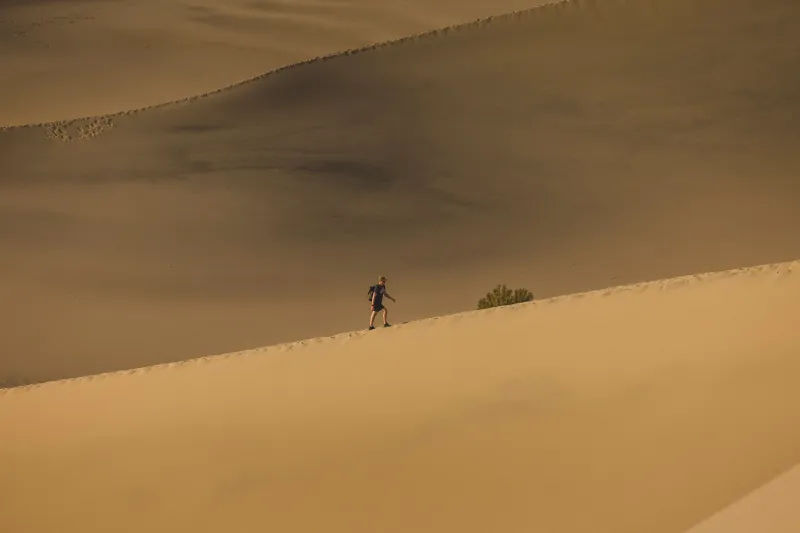
There is a particular kind of darkness that no flashlight can fix. It is not the darkness of grief, exactly, nor of depression, though it can resemble both. It is the darkness that descends when the beliefs you have carried your entire life suddenly feel like borrowed clothes—ill-fitting, perhaps belonging to someone else entirely. You reach for the familiar prayers and find them hollow. You look for the map you were given and realize, with a quiet horror, that the territory has changed.
This is spiritual crisis. And in America's relentlessly solution-oriented culture, where discomfort is something to be optimized away, the experience is profoundly isolating. We are not taught to sit inside our unraveling. We are taught to fix it.
But what if the unraveling is not the problem? What if it is, in fact, the most important thing that has ever happened to you?
The Desert Has Always Been a Sacred Place
Across traditions—from the Hebrew scriptures to the Christian mystics, from Buddhist accounts of the dark night of the soul to Indigenous vision quest practices—the wilderness has never been incidental to spiritual development. It has been central to it.
Moses spent forty years in the desert before the burning bush. Jesus retreated into the wilderness for forty days before his public ministry began. The great Sufi poets wrote ecstatically about the anguish of divine absence. These are not cautionary tales. They are blueprints.
The wilderness, in nearly every major spiritual tradition, is the place where false certainties die and genuine encounter becomes possible. It is uncomfortable precisely because it is real. The gods of our convenience—the tidy theologies, the inherited certainties, the faith that has never been tested—cannot survive the desert. But something deeper often can.
The question is whether we are willing to stay long enough to find out.
Why We Rush to Resolve What We Should Inhabit
American culture has a complicated relationship with spiritual ambiguity. We are a nation that prizes answers, progress, and forward movement. We fill our bookshelves with titles promising spiritual breakthroughs in thirty days or fewer. We attend weekend retreats designed to deliver transformation on a schedule.
There is nothing wrong with seeking support or guidance during difficult seasons. But there is a real danger in treating spiritual crisis as a malfunction to be corrected rather than a passage to be navigated. When we rush to resolve our disorientation—by forcing ourselves back into old belief structures we no longer trust, or by swapping one tidy worldview for another—we rob ourselves of what the crisis was trying to teach.
Psychologist and theologian James Fowler, in his landmark research on stages of faith development, described a phase he called individuative-reflective faith—a period in which adults begin to critically examine the beliefs they absorbed in childhood. This phase is frequently accompanied by profound discomfort, even anguish. Many people mistake it for the death of their faith. Fowler argued it was, in fact, the precondition for a far more mature and personally integrated spiritual life.
The crisis is not the end of the story. It is, more often, the end of the preface.
What Spiritual Disorientation Is Actually Asking of You
When the ground of your faith shifts, it is easy to interpret that shift as loss—and there is loss involved. The loss of certainty. The loss of a community that may no longer feel like home. The loss of a version of yourself who found comfort in answers that no longer satisfy.
But disorientation is also, quietly, an invitation. It is an invitation to ask harder questions. To move past the inherited and into the genuinely discovered. To stop performing a faith you do not feel and begin the slower, messier, more rewarding work of building one you actually inhabit.
This does not mean abandoning tradition. For many people, the journey through crisis leads back to tradition—but with new eyes, a new depth of understanding, and a personal ownership that was never possible when belief was simply assumed. For others, the path leads somewhere genuinely new. Neither outcome is superior. What matters is that the faith arrived at is yours—tested, examined, and chosen.
Spiritual crisis strips away what was never truly yours to begin with. That is not a punishment. That is a gift.
The Practice of Staying Present in the Not-Knowing
So how does one actually navigate a spiritual crisis rather than flee it? There is no formula—and any article that claims otherwise should be read with skepticism. But there are orientations that many seekers have found useful.
Resist the urge to immediately replace what has been lost. When a belief system collapses, the temptation is to fill the vacuum quickly. Give yourself permission to live in the question for a while. The space between what you no longer believe and what you have not yet discovered is uncomfortable, but it is also alive.
Find honest community. Spiritual crisis thrives in isolation. Seek out people—whether in a faith community, a therapist's office, a spiritual director's presence, or an honest conversation—who can witness your disorientation without rushing to resolve it for you. The right companions do not hand you answers; they sit with you in the asking.
Treat your doubt as data, not failure. Doubt is not the opposite of faith. It is often the most honest expression of it. The questions you cannot silence are pointing toward something. Follow them with curiosity rather than shame.
Allow yourself to grieve. The loss of a worldview is a real loss, and it deserves to be mourned. Rushing past the grief does not accelerate the transformation—it simply buries what needs to be processed.
The Other Side of the Desert
No one can promise you what waits on the other side of a spiritual crisis. That is, in part, what makes it so frightening. The outcome is genuinely open. The person you become through the passage will not be identical to the person who entered it.
But here is what the long record of human spiritual experience suggests: those who find the courage to stay present in their disorientation—who resist the temptation to flee back into comfortable unreality or forward into premature resolution—tend to arrive somewhere more genuine than where they began. Their faith, whatever form it takes, is no longer borrowed. It has been earned.
The wilderness is not a detour from the spiritual life. For many of the most profound seekers across history, it has been the very heart of it.
You are not lost. You are becoming. And that, however disorienting it may feel right now, is one of the most sacred things a human being can do.