Leaving the Faith You Were Born Into: The Grief, the Freedom, and What Comes After
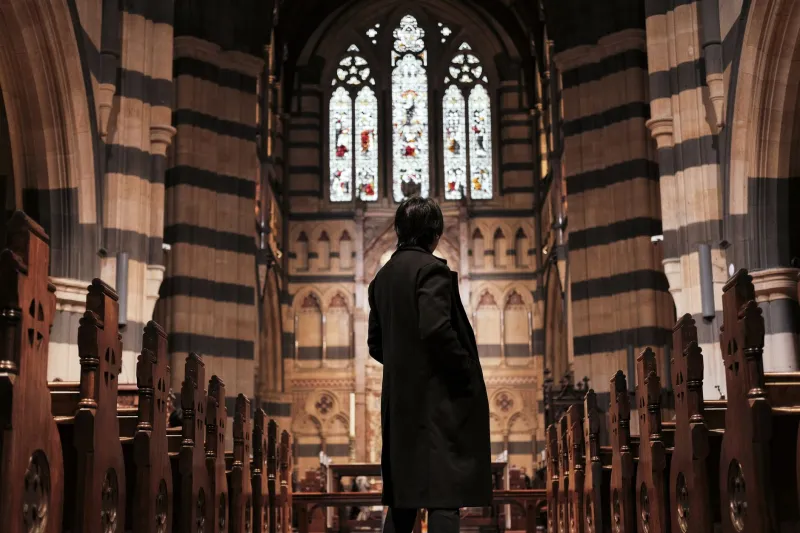
The Sunday mornings are the strangest part. You know the hymns by heart—you have known them since before you could read—and yet you are no longer certain you believe the words. The prayers feel like a borrowed language, fluent but foreign. The community that shaped your earliest understanding of goodness and belonging is still there, still warm, still expecting you to occupy your familiar pew. And you are not sure you can.
This is the quiet crisis that millions of Americans are currently navigating, largely without a roadmap. Studies consistently show that religious disaffiliation in the United States has accelerated dramatically over the past two decades, with the largest shifts occurring among adults who were raised in faith communities. But the statistics do not capture what this actually feels like from the inside—the specific texture of laying down a belief system that was also a family system, a cultural identity, a way of making sense of suffering and death and the strange fact of being alive at all.
What Is Actually Being Lost
It would be a mistake to frame religious departure primarily as an intellectual event—as though a person simply updated their metaphysical spreadsheet and moved on. For those raised inside a living faith tradition, belief is woven into the fabric of identity in ways that resist easy extraction.
When you leave the faith you were raised in, you may be losing your primary community. You may be losing a shared language with your parents, your siblings, your oldest friends. You may be losing a framework for understanding suffering—one that, whatever its limitations, at least offered answers when the world went dark. You may be losing a version of yourself: the child who knelt at that altar, who memorized those verses, who felt, at least sometimes, genuinely held by something larger than herself.
Grief is the appropriate word for this. Not weakness, not confusion, not ingratitude—grief. Something real is ending, even when it is ending because it needed to.
The Guilt That Nobody Warned You About
For many who have walked this path, the guilt arrives before the liberation does. It is not merely the guilt of disappointing family members, though that is real enough. It is something deeper—a feeling of betrayal directed inward, as though departing from the tradition is an act of violence against the child you once were, the community that formed you, or the divine itself.
This guilt deserves to be examined rather than dismissed. Where does it come from? In many cases, it has been consciously cultivated by religious systems that frame doubt as disloyalty and departure as spiritual failure. In other cases, it arises from genuine love—love for parents who find meaning in a faith you can no longer share, love for a community that is real even when its theology no longer is.
But guilt is not the same as wrongdoing. The fact that leaving causes pain—your own, and others'—does not mean leaving is wrong. Adults are permitted, perhaps even obligated, to inhabit their own beliefs rather than their parents'. The alternative—a lifetime of performed faith, of mouthed creeds you do not hold, of spiritual inauthenticity maintained for the comfort of others—is its own form of slow damage.
The Complicated Inheritance
Here is what rarely gets said in the deconstruction conversations that have proliferated across American podcasts and social media: the tradition you are leaving almost certainly gave you something. Perhaps it gave you a capacity for stillness, a habit of gratitude, a framework for ethical reasoning, an instinct toward community. Perhaps it gave you your first experience of genuine awe, of feeling small in the best possible sense, of sensing that your life is part of something larger than your own story.
The work of conscious spiritual departure is not to erase that inheritance but to sort it—to distinguish what was life-giving from what was harmful, what was true from what was merely tribal, what you want to carry forward from what you are ready to set down.
This is painstaking work, and it cannot be rushed. The person who leaves a childhood faith in a blaze of righteous rejection and declares the whole enterprise worthless has not completed the journey any more than the person who stays out of fear. Both are avoiding the harder, slower labor of genuine discernment.
Finding Your Own Language for the Sacred
One of the most disorienting aspects of departing from an inherited faith is the sudden absence of a shared vocabulary for spiritual experience. The tradition you were raised in gave you words—sin, grace, salvation, covenant, resurrection—that mapped onto something real in your interior life, even if the doctrinal framework around them no longer holds. When you leave, you may find yourself having experiences that feel unmistakably spiritual and having no language adequate to describe them.
This is not a crisis. It is an invitation.
The construction of a personal spiritual language—one that is honest about what you actually experience rather than what you have been told to experience—is one of the most meaningful projects a human being can undertake. It may draw on your tradition of origin, on other traditions you encounter, on the natural world, on literature, on silence. It will be imperfect and provisional and entirely your own.
This is, in a very real sense, what Chat With iGod is built around: the idea that the conversation with the divine is personal, direct, and not fully owned by any institution. That you are permitted to bring your own questions, your own doubts, your own half-formed understanding, and that the conversation is better for your honesty than for your compliance.
Honoring Your Roots Without Being Held Hostage by Them
The question of family is perhaps the most practically difficult dimension of this journey. How do you maintain genuine closeness with parents and siblings whose faith remains central to their identity and their love for you, when that faith is no longer yours?
There is no clean answer. But there is a useful distinction between the faith itself and the people who hold it. You can love your mother's devotion—can recognize in it something real and beautiful and sustaining for her—without sharing it. You can participate in family religious rituals from a place of love and respect rather than pretense, and you can be honest, when the time is right and the relationship is strong enough, about where you actually stand.
What you cannot do, sustainably, is perform a faith you do not have. The performance will corrode you, and eventually it will corrode the relationships it was designed to protect.
The most loving thing you can offer the people who raised you in faith is your honest self—the self that took their formation seriously enough to wrestle with it, to examine it, and to arrive somewhere that is genuinely yours. That is not rejection. That is the work they raised you to be capable of doing.