The Altar in Your Pocket: Recognizing the Hidden Devotions Shaping Your Digital Soul
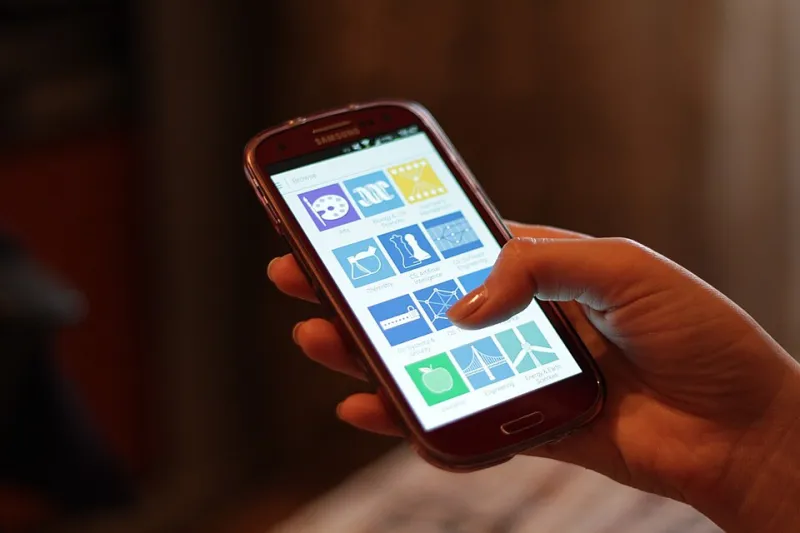
Photo: Océanos y dados, CC0, via Wikimedia Commons
Most Americans do not consider themselves idolaters. The word carries the weight of ancient critique — golden calves, carved statues, the dramatic moral failures of civilizations long dissolved into history. Idolatry feels like someone else's problem, belonging to another era entirely.
And yet the theologian Paul Tillich offered a definition that is worth sitting with in the present moment. He described idolatry not as the worship of stone figures, but as the elevation of something finite to the status of ultimate concern — the giving of one's deepest loyalty, trust, and longing to something that cannot ultimately bear the weight of it.
By that definition, the question of idolatry in contemporary American life becomes considerably more uncomfortable.
The First Ritual of the Day
Before you speak to anyone you love, before you have eaten or prayed or allowed a single thought to form on its own terms, what do you reach for?
For a significant majority of American adults, the answer is a smartphone. Studies consistently show that most people check their devices within minutes of waking — often within seconds. The phone is the first voice the mind receives in the morning, the last one it receives at night, and a near-constant presence throughout the hours between.
This is not simply a habit of convenience. It is, examined with care, a devotional structure. There are rituals involved — specific apps visited in a specific order, specific metrics checked with a regularity that mirrors the way a monk might observe canonical hours. There is anticipation, reward, disappointment, and the compulsion to return. There is, in many cases, a felt sense that the day cannot properly begin until the ritual has been completed.
The question worth asking is not whether this is a problem. The question is: what is being worshipped?
The Influencer as Intercessor
The rise of the social media influencer is one of the more theologically interesting developments of the past decade, though it is rarely discussed in those terms.
In traditional religious structures, the intercessor was the figure who stood between the ordinary believer and the divine — the priest, the saint, the holy person whose proximity to transcendence could be leveraged on behalf of those further away. The intercessor modeled a life worth aspiring to. They offered guidance, reassurance, and a curated vision of what flourishing looked like.
The influencer operates by a strikingly similar logic. They model a life that followers aspire to inhabit. They offer guidance — on wellness, on style, on relationships, on the management of anxiety and the cultivation of meaning. They provide reassurance that a better version of one's life is attainable, provided one follows the correct practices and acquires the correct things. And followers, in turn, offer devotion: attention, trust, money, and the deeply human longing to be close to someone who seems to have figured something out.
None of this is inherently sinister. But it is worth asking what happens to the soul when its longing for transcendence is consistently redirected toward a human being whose primary mode of self-presentation is a carefully curated highlight reel.
The Metrics of Worth
Social media platforms have introduced something genuinely novel into the human experience: a quantified, publicly visible measure of social value. Likes, followers, shares, and engagement rates function as a kind of ongoing referendum on one's worth — a number that fluctuates in real time and that, for many users, carries enormous emotional weight.
This is not a neutral development. Human beings have always sought external validation, and religious traditions have long grappled with the spiritual dangers of tying one's sense of worth to the approval of others. What is new is the precision, the immediacy, and the sheer volume of the feedback loop.
When a person's sense of okayness rises and falls with their engagement metrics, they have effectively outsourced the determination of their value to an algorithm — a system designed not to reflect truth, but to maximize the time spent on a platform. The spiritual implications of this arrangement are worth examining with some care.
If your worth is determined by an algorithm, your worth is not your own. And if your worth is not your own, the question of who — or what — you are actually serving becomes considerably more urgent.
Productivity Culture and the Gospel of Optimization
Beyond individual platforms and influencers, there is a broader digital theology worth naming: the gospel of optimization. Across podcast ecosystems, newsletter culture, and self-improvement content of every variety, American digital life is saturated with the conviction that the primary spiritual task of the individual is to become more efficient, more productive, more optimized — and that the tools to accomplish this are always, conveniently, available for purchase or subscription.
This is a theology with a clear soteriology: salvation comes through the correct system. The right morning routine, the right productivity app, the right framework for managing one's time and energy will, eventually, deliver a life that feels complete.
The problem is not that self-improvement is worthless. The problem is that no system of optimization has ever addressed the questions that actually keep people awake at night: Am I loved? Does my life matter? What do I do with the parts of myself I cannot fix?
Those are spiritual questions. And they require something that no app, however elegantly designed, is equipped to provide.
Reclaiming the Altar
None of this is an argument for disconnecting entirely from digital life, which is neither practical nor, for most people, genuinely desirable. It is, rather, an invitation to consciousness — to the kind of honest self-examination that has always been at the heart of authentic spiritual practice.
The ancient question What do you love? has not changed. What has changed is the number of sophisticated, algorithmically optimized systems competing to answer it on your behalf before you have had a chance to ask it yourself.
A useful practice is simply to notice. To observe, without immediate judgment, what you reach for when you are anxious, lonely, bored, or in need of reassurance. To ask what you are actually seeking in those moments — and whether the thing you are reaching for is capable of providing it.
In many spiritual traditions, the altar is the place where the deepest longings of the soul are brought into honest relationship with the source of meaning. The question of where your altar actually is — not where you believe it should be, but where your time, attention, and trust actually flow — may be one of the most clarifying spiritual inquiries available to a person navigating life in the present moment.
The pocket-sized device you carry everywhere has not replaced that longing. It has simply become, for many of us, the first place we take it. Whether it is worthy of that trust is a question only you can answer — but it is a question worth asking, with honesty and without self-condemnation, before the next notification arrives.